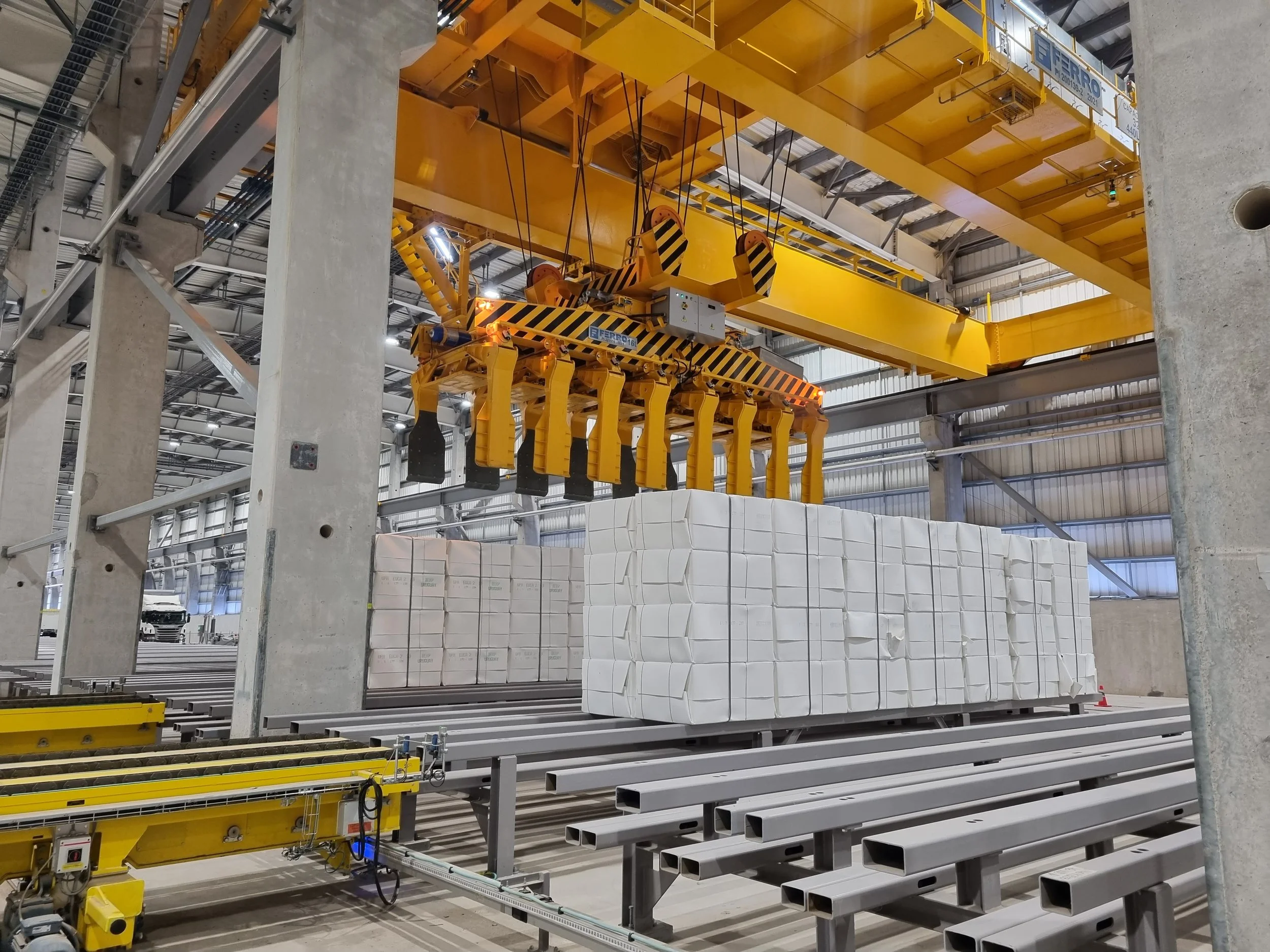
Pulp bales are formed into 16tonne bundles for lifting into the wagon by overhead crane.
Raumaster Paper’s loading systems have transformed the handling of rolls, pulp bales, timber and sea containers – making operations safer, more efficient and significantly more environmentally responsible. Increasingly complex customer needs continue to drive new innovations.
Often our inventions begin with a customer’s need or challenge. In the field of automated unloading and loading, these challenges have now evolved into an entire product family.
Our first fully automatic loading system was delivered to Kemi in 2006. The project handled rolls and pallets transported from the warehouse to the harbour by truck. Belt conveyors loaded the cargo automatically into special trailers equipped with their own matching conveyors. At the harbour, the load was automatically transferred onto receiving belt conveyors.
“It’s impressive when customers see us as an innovative partner.”
Today, loading is performed using v-slat conveyors or chain conveyors, or by transferring cargo into the wagon with a shifting beam system. For automation, each loading system presents a new and unique challenge.
“In loading operations, the customer’s factory system defines the process very strongly. It provides all information about which rolls should be loaded into which shipment – and in what order. Communication between the loading system and the factory system must be seamless,” explains Joni Lahtonen, Head of Automation at Raumaster Paper.
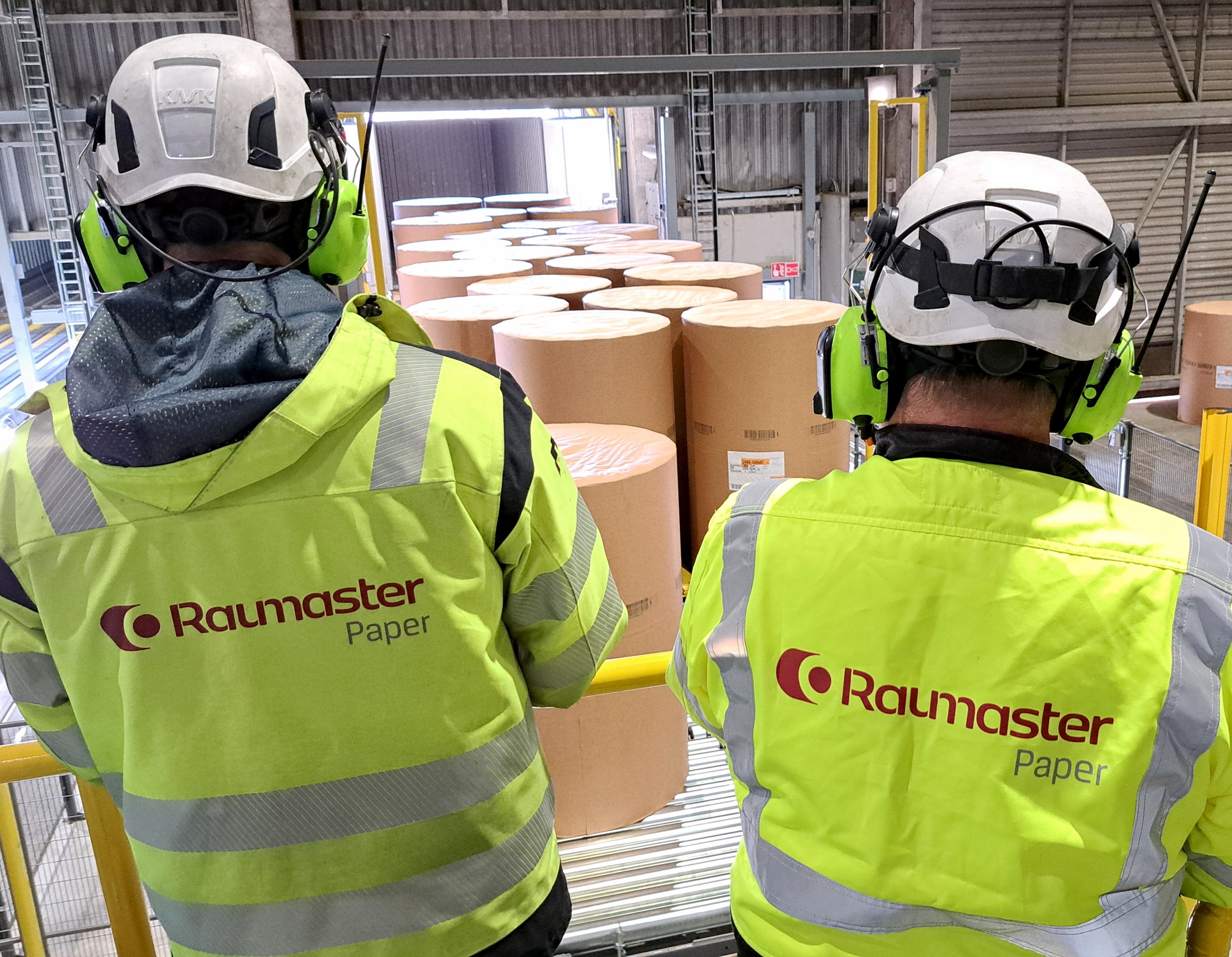
The automatically assembled load formation is adjusted to fit the target container.
Handling and loading of pulp bales
In 2019, a customer request led to our first automated system for handling and loading pulp bales. The enormous project included over one hundred loading bays, where overhead cranes lift fully automated load formations into railway wagons or truck trailers. Each railway wagon can take two bale loads with a combined weight of around 32 tonnes.
“The major challenge for automation in this project was the length of the loading area. The loading area is about 500 metres long and can accommodate 26 rail wagons – two trains positioned side by side. Each wagon must have its load available at precisely the right moment, as transferring material from one end of the area to the other is timeconsuming,” explains Chief Automation Engineer Timo Montonen, who headed the automation for this project.
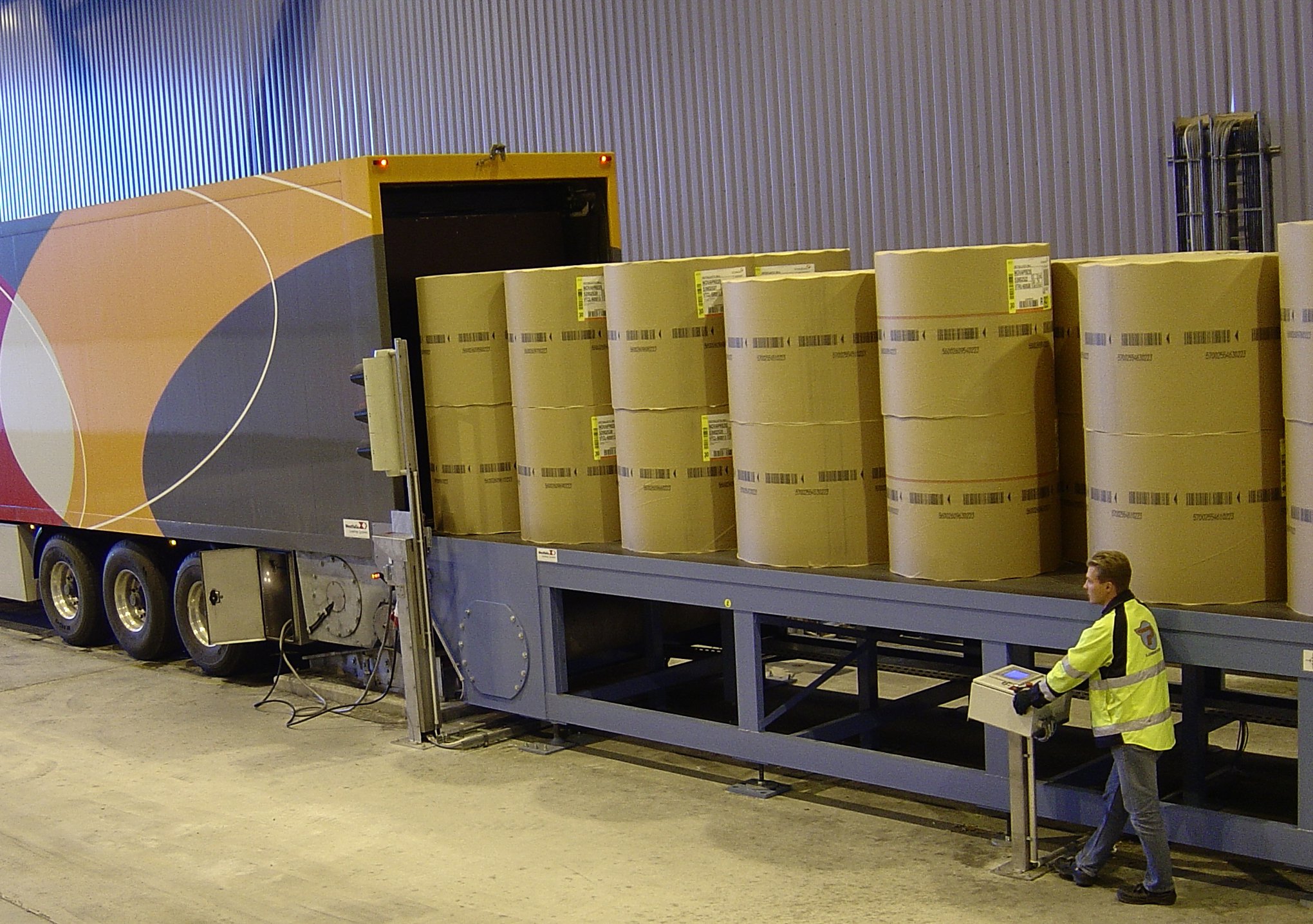
The loads were transferred automatically into the trucks using belt conveyors.
A solution for automated timber loading
That same year, a customer approached us for an automated loading system for timber, setting three clear targets for the solution. The system had to be exceptionally safe, achieve extremely low CO₂ emissions, and handle the mill’s full daily production capacity.
The delivered system fulfilled the targets – CO₂ emissions in the loading area were reduced by more than 92%, the capacity performance met expectations, and the receiving truck driver did not need to leave the vehicle at any stage of the loading process. The system operates without putting a single worker at risk.
“We were very open with the customer and said that we had never built a system like this for timber. Their response was that nobody else had either. It’s impressive when customers see us as an innovative partner – and of course, we were ready to take on the challenge,” says Raumaster Paper’s Managing Director, Pekka Leino.
Watch the video of the 2023 delivered unloading and loading system: